Laravel is a full-stack, PHP-based web framework focused on developer experience and clean, minimal code. Taylor Otwell created it in 2011, inspired by frameworks like CodeIgniter, Symfony and Ruby on Rails.
Artificial Intelligence (AI) has emerged as a transformative force in numerous industries, and cybersecurity is no
exception. As cyber…
Introduction to AI in Cybersecurity
Artificial Intelligence (AI)
has emerged as a transformative force in numerous industries, and cybersecurity is no exception. As cyber
threats continue to grow in complexity and scale, organizations are turning to AI-powered solutions to
bolster their defense strategies.
AI brings a new level of sophistication and
efficiency to the realm of cybersecurity, enabling proactive threat detection, rapid incident response, and
enhanced vulnerability management.
This article explores the potential of AI in
cybersecurity, delving into its role in threat detection and prevention, incident response, vulnerability
assessment, security analytics, and monitoring.
Additionally, it addresses the challenges and
ethical considerations associated with AI-driven cybersecurity and offers insights into the future
integration of AI and human intelligence. With the promise of increased security and resilience, the
adoption of AI in cybersecurity is poised to revolutionize the way organizations protect their digital
assets.
1.1 What is Artificial Intelligence (AI)?
Artificial Intelligence, or AI for short, is a
groundbreaking technology that enables computers to perform tasks that typically require human intelligence.
It encompasses various techniques such as machine learning,
natural language processing, and computer vision to mimic human cognitive capabilities.
1.2 The Intersection of AI and Cybersecurity
The world of cybersecurity is constantly
evolving, as cyber threats become more sophisticated and relentless. That’s where AI steps in, offering a
powerful and promising solution to combat these evolving threats.
The intersection of AI and cybersecurity combines
the analytical prowess of AI with the ingenuity of cybersecurity professionals to defend against emerging
threats.
1.3 Benefits and Advantages of AI in
Cybersecurity
Integrating AI in cybersecurity brings forth a
multitude of benefits. Firstly, AI can analyze vast amounts of data in real-time, detecting anomalies and
patterns that would be virtually impossible for humans to identify. Secondly, AI-powered systems can
continuously adapt and learn from new threats, enhancing the overall security posture
. Lastly, AI frees up valuable human resources,
allowing cybersecurity experts to focus on high-level decision-making and strategic initiatives.
Role of AI in Threat Detection and Prevention
2.1 Traditional Threat Detection Methods
Traditional threat detection methods often rely
on known signatures or predefined rules to identify threats. While effective to some extent, these methods
struggle to keep up with the speed at which new threats emerge. Human analysts must manually update and
maintain these systems, creating a lag between threat detection and response.
2.2 How AI Enhances Threat Detection
AI revolutionizes threat detection by leveraging
machine learning algorithms and behavioral analytics. By analyzing vast datasets and historical patterns, AI
can identify abnormal activities and potential threats in real-time.
This proactive approach enables organizations to
detect and respond to threats quickly, minimizing the potential damage caused by cyberattacks.
AI-powered Threat Prevention Techniques
With AI, organizations can go beyond detection
and proactively prevent threats. AI-powered systems can autonomously analyze network traffic, identify
malicious behavior, and block potential threats before they infiltrate the system. By continuously learning
from new data, AI can refine its prevention techniques, fortifying the cybersecurity defense.
Enhancing Incident Response with AI
Challenges in Incident Response
Incident response is a critical aspect of
cybersecurity, involving timely detection, investigation, and mitigation of security incidents. However, the
complexity and volume of security events often overwhelm human analysts, leading to delays in response and
increased risk.
AI-driven Incident Response Automation
AI can automate various aspects of incident
response to expedite the process. Through intelligent automation, AI can triage security alerts, prioritize
incidents based on severity, and even initiate predefined response actions. This automation saves valuable
time, allowing incident response teams to focus on critical tasks that require human intervention.
3.3 AI-assisted Incident Analysis and
Decision-making
AI can augment incident analysis by providing
analysts with valuable insights and context. AI algorithms can sift through massive amounts of data,
correlate events, and provide actionable intelligence to human analysts. This AI-assisted decision-making
enables analysts to make informed choices, leading to more effective incident response and mitigation.
AI-powered Vulnerability Assessment and Patch
Management
Traditional Vulnerability Assessment Techniques
Traditional vulnerability assessment techniques
involve manual scanning and identification of vulnerabilities in systems and networks. However, these
approaches are time-consuming and often struggle to keep up with the constantly evolving threat landscape.
AI-driven Vulnerability Detection and Assessment
AI introduces a new era of vulnerability
assessment by leveraging machine learning and automated scanning techniques. AI-powered systems can analyze
complex data sets, detect patterns, and identify potential vulnerabilities across the network
infrastructure. This proactive approach enables organizations to prioritize and remediate vulnerabilities
efficiently.
AI-enhanced Patch Management Strategies
Patch management is crucial for maintaining a
secure environment, but it can be a daunting task due to the sheer volume of software and systems. AI can assist in patch
management by intelligently analyzing vulnerability data and recommending patches based on criticality
and potential impact. This AI-enhanced approach streamlines the patching process and reduces the risk of
security breaches.
By embracing AI in cybersecurity, organizations
can leverage its potential to enhance threat detection, automate incident response, and improve
vulnerability assessment. While AI is not a silver bullet, it certainly offers a formidable ally in the
ongoing battle against cyber threats. So, let’s embrace this technological marvel and build a safer digital
future!
Leveraging AI for Security Analytics and
Monitoring
In the ever-evolving world of cybersecurity,
staying one step ahead of threats is crucial. That’s where artificial intelligence (AI) comes in. AI has the
potential to revolutionize security analytics and monitoring, making it faster, more efficient, and more
effective than ever before.
Traditional Security Analytics and Monitoring
Traditionally, security analytics and monitoring
have relied on human experts to manually analyze vast amounts of data to detect and respond to threats. This
process is time-consuming, prone to human error, and often unable to keep up with the rapidly changing
threat landscape.
AI-based Security Analytics and Behavioral
Analysis
With AI, security analytics can be automated and
enhanced through machine learning algorithms. AI systems can analyze massive volumes of data in real-time,
identifying patterns, anomalies, and potential threats that might go unnoticed by human analysts.
Additionally, AI can perform behavioral analysis, learning from past incidents to predict and prevent future
attacks.
Real-time Threat Monitoring with AI
AI-powered systems can continuously monitor
networks, endpoints, and applications in real-time, rapidly detecting and responding to threats.
By leveraging machine learning and deep learning
algorithms, AI can quickly identify and mitigate potential attacks, minimizing damage and reducing response
time.
Challenges and Ethical Considerations in
AI-driven Cybersecurity
While the potential of AI in cybersecurity is
immense, it also brings forth a set of challenges and ethical considerations that need to be addressed.
Limitations and Risks of AI in Cybersecurity
AI systems are not infallible. They can be fooled by cleverly designed attacks, and false
positives and false negatives are still a concern.
Additionally, AI algorithms can perpetuate biases
and discrimination if not carefully designed and monitored.
Ensuring Ethical Use of AI in Cybersecurity
To ensure the ethical use of AI in cybersecurity,
transparency and accountability are crucial.
AI algorithms should be developed and deployed in
a responsible manner, and organizations must adhere to ethical guidelines and regulations.
Clear policies and frameworks need to be
established to govern the use of AI in cybersecurity.
6.3 Addressing Bias and Accountability in
AI-driven Systems
Bias in AI algorithms can have significant
consequences, including discriminatory outcomes. It is important to address bias in AI-driven systems and
ensure fairness and equality in cybersecurity practices. Additionally, organizations need to establish
mechanisms for accountability, ensuring that AI-driven decisions can be traced back and reviewed when
necessary.
Future Outlook: Integration of AI and Human
Intelligence in Cybersecurity
The future of cybersecurity lies in the
collaboration between AI and human experts, leveraging the strengths of both to create a more resilient
defense against threats.
7.1 Collaboration of AI and Human Experts
AI can assist human experts by analyzing vast
amounts of data, providing valuable insights and recommendations. Human experts, on the other hand, bring
contextual understanding, critical thinking, and creativity to the table.
By combining
the power of AI and human intelligence, organizations can achieve a more comprehensive and effective
cybersecurity strategy.
7.2 The Role of Human Oversight in AI-driven
Cybersecurity
While AI can automate many tasks and augment
human capabilities, human oversight remains crucial. Humans need to oversee AI systems, ensuring they are
functioning properly, making ethical decisions, and addressing any limitations or biases. Human experts can
also provide the final judgment and decision-making in complex scenarios.
Augmented Intelligence: The Future of
Cybersecurity
The future of cybersecurity is not about AI
replacing humans but augmenting their capabilities. Augmented intelligence, where AI and human intelligence
work together harmoniously, holds immense promise. AI can support human experts by automating repetitive
tasks, detecting and analyzing threats at scale, and providing tailored recommendations, while humans
provide the intuition, creativity, and adaptability necessary to outsmart sophisticated adversaries.
Conclusion: The Promising Future of AI in
Cybersecurity
AI holds enormous potential in revolutionizing
cybersecurity. By leveraging AI for security analytics and monitoring, addressing the challenges and ethical
considerations, and integrating AI with human intelligence, organizations can enhance their defenses against
cyber threats.
The future of cybersecurity lies in a symbiotic
relationship between AI and human experts, where each complements the other’s strengths, ultimately creating
a safer digital environment.
So, let’s embrace AI with open arms, secure in the
knowledge that our smartphones will stop autocorrecting “password” to “123456” anytime soon.
Conclusion: The Promising Future of AI in
Cybersecurity
In conclusion, the potential of artificial
intelligence (AI) in cybersecurity is immense. AI technologies offer advanced capabilities that can
significantly enhance threat detection and prevention, streamline incident response, and fortify
vulnerability assessment and patch management processes.
While challenges and ethical considerations exist,
such as bias and the need for human oversight, the integration of AI and human intelligence holds great
promise for the future of cybersecurity. As organizations continue to face evolving and sophisticated cyber
threats, embracing AI-driven solutions will be crucial in mitigating risks and safeguarding digital assets.
By harnessing the power of AI, the cybersecurity landscape can be revolutionized, enabling a proactive and
resilient defense against emerging cyber threats.
FAQ :
What is the role of AI in cybersecurity?
AI plays a pivotal role in cybersecurity by
leveraging machine learning algorithms and data analysis to enhance threat detection, automate incident
response, bolster vulnerability assessment, and enable more effective security analytics and monitoring.
AI brings an added layer of intelligence and
automation to cybersecurity processes, helping organizations stay ahead of evolving cyber threats.
Are there any limitations to AI in
cybersecurity?
While AI offers great potential in cybersecurity,
it is not without limitations. Some challenges include the potential for bias in AI algorithms, the need for
human oversight to prevent false positives or negatives, and the ethical considerations surrounding data
privacy and security. It is important to address and mitigate these limitations to ensure the responsible
and effective use of AI in cybersecurity.
How does AI enhance incident response in
cybersecurity?
AI enhances incident response in cybersecurity
through automation and intelligent analysis. AI-driven systems can rapidly detect and respond to security
incidents, minimizing response time and reducing the impact of cyber threats. Automated incident response
can help organizations take immediate action, while AI-assisted incident analysis and decision-making
provide insights and recommendations for effective incident resolution.
How will the integration of AI and human
intelligence shape the future of cybersecurity?
The integration of AI and human
intelligence holds great promise for the future of cybersecurity. While AI can automate and augment certain
processes, human expertise is essential for critical decision-making, context comprehension, and adapting to
complex and evolving threats. The collaboration between AI and human intelligence can lead to more effective
threat mitigation, improved incident response, and enhanced overall cybersecurity resilience.
AI and machine learning is going to change entire future
AI and machine learning is going to change entire future
If it is dealing with emergencies or diseases or development in business |Cyber security|
AI and machine learning is going to
change entire future
If it is dealing with
emergencies or diseases or development in business |Cyber security|
It was very difficult for me to understand this in the beginning. When someone
told me that machine learning and artificial intelligence will change everything, I used to think how will
it replace everything or will it destroy us humans?
I understood these things when I
was taking an applied calculus class in mathematics.
When I took the Applied Mathematics
Calculus Arithmetic class a little carefully, I found out about how machine learning will change everything.
In 2019, when the corona virus caused havoc all over the world, Germany and other countries where there were data
scientists. They collected sun samples from different areas, they studied all these data and told
how many diseases are coming from which place, this is what we call data cleaning and probability finding in machine learning.
Such a small display of a few lines can
neatly represent several years of code-up data. If machine learning is used in the right way, we can remove
ourselves from many diseases in the past. We can also see how far we can go.
Machine learning is not only here, but machine
learning has become so advanced that you can even recognize what may happen on which day. Finally, all these
things have to be found by probability. Yes, we cannot say that it must happen on the same day.
The data of the whole year will be extracted.
Through modeling and data science, we can not
only identify diseases, but also determine how often natural disasters occur and in which regions. Save
yourself from the trouble we bring.
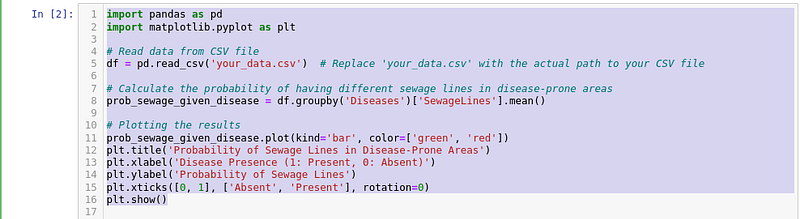
By using Data Manipulation using Pandas:
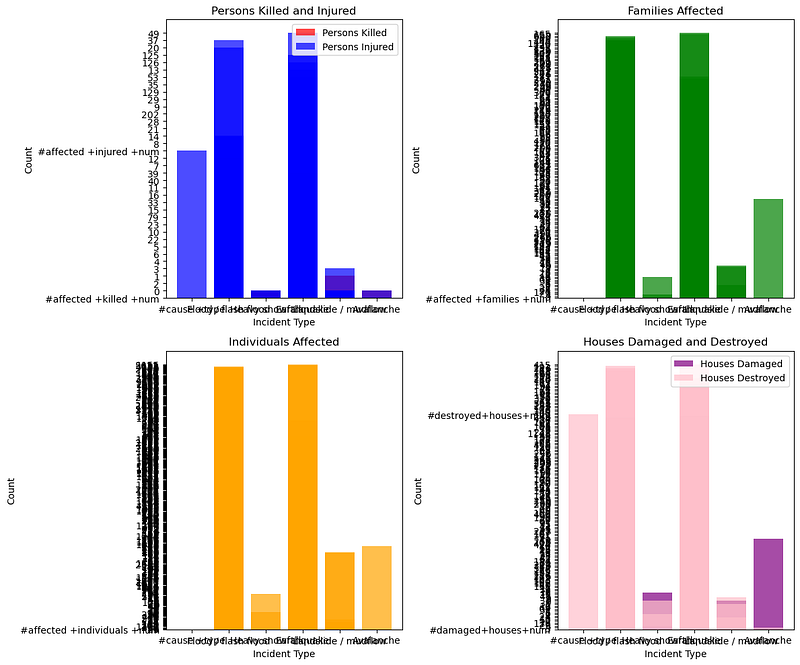
Let’s look at a simple data in which we are told
how many natural disasters will occur in Afghanistan in 2022. And in which area, how much was the loss of
life and we will also determine the age of the majority of those who died there.
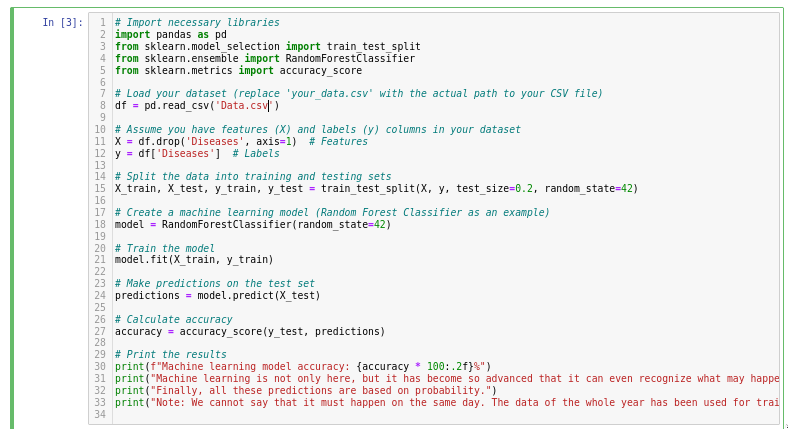
# Import necessary libraries
import pandas as pd from sklearn.model_selectionimport train_test_split from sklearn.ensembleimportRandomForestClassifier from sklearn.metricsimport accuracy_score
Inside Python there are some libraries like
pandas and so on. Which is to make your job easier, actually the libraries are already set up on top of a
mathematical calculation that doesn’t let you worry too much about the fact that you have to do a lot of
mathematical calculations, just replace some values. have to do.
print(df.head())
# Plotting the data fig, axs = plt.subplots(2, 2, figsize=(12, 10))
Implementation of machine learning model in
PenTesting:
I realise somehow I need to work on machine learning to protect something amazing the help me
in daily routine.
To be honest the result was quite amazing.
My honest opinion about the machine learning and
data scientist it is amazing it’s quite annoying.
thing when you have a big amount of data for example you
have around million of records that is quite hard to scan and we cannot every time purchase
different kind of scripts and tools online.
a few example that was helping me the figure out
and have me to “generate big amount of revenue” so I decided to write about different kind of machine
learning model script that will help me to protect exact amount
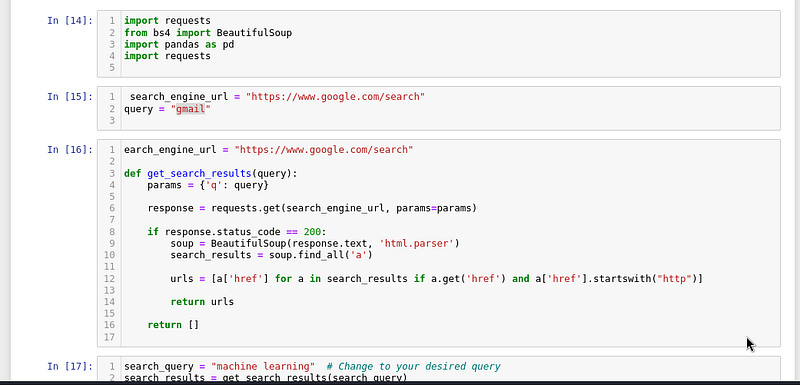
I developed a web scraper and automation
script for collecting internet data. The script adjusts user
agents and IP protocols to address
challenges in machine learning and artificial intelligence.
It
extracts data from Google, saves it in a CSV file, and tests different user agents imported from
a CSV to identify accurate results. This process helped efficiently test 28,000 proxies from PayPal.
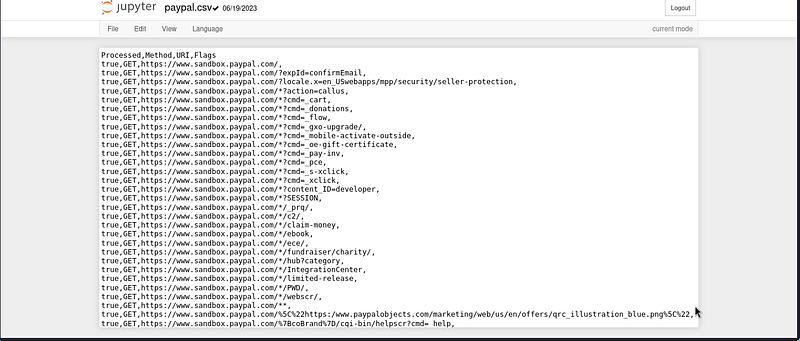
Urls From CSV File
the first of all I will import a pandas as a pdand some other libraries and some cares I can use
numpy but when we all set this all things we have
to drop all the duplicates
import pandas as pd
df = pd.read_csv(r"paypal.csv")
in This case you can see there is around
“28862 rows × 4 columns ”urls that was quite a big
amount by using Panda data frame library.
I can drop all the columns you can do this all
thing using Google spreadsheet Microsoft any other tool but your own resources can be safe your much much
time that’s why we prefer to you that can understand your logic.
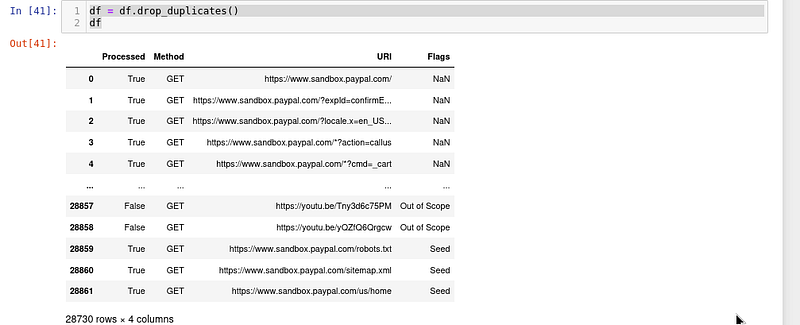
df = df.drop_duplicates()
df
for x in df.index:
   if  df.loc[x , 'Flags' ] == 'Out of Scope':

    df.drop(x , inplace=True )
df
after dropping a big number of Rose I get a
clean data that was not much clean that I was thinking but Quite better first I remove all the duplicate
then I decided to remove out of the scope to Domains
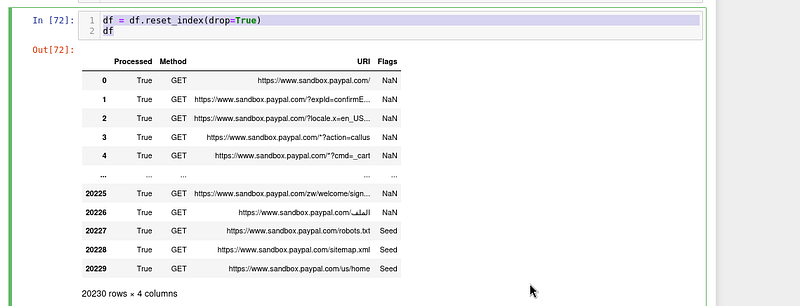
20230 rows × 4 columns
df = df.reset_index(drop=True)
df
Filtering a big amount of data of subdomains
to find possibility of submit takeover.
I have already right a couple of articles about
to finding the possible t of subdomen if you haven’t check it out so you can check it in this case I am
going to use up exist record that .I have already the record has already lot of junk that I will probably
remove it
Have you ever wondered how long you can hold on or when you will give up
Sometimes I think a lot about how long I will survive and how many years I can breathe. These small things help us
at many places in life…
Have you ever wondered how long you
can hold on or when you will give up
Sometimes I think a lot about how long I will
survive and how many years I can breathe. These small things help us at many places in life and at many
places it is very important to make us understand about this thing. This thing happened to me a few times
ago when I went to a place to give an equity management test. I was paying him fees for the test and every
time I was getting no work. I am still sure that one day I will pass him because my fear of him is at the
base of many things.
the story is like this
My name is Imran, I am a security researcher. I
have been working for 5 years. If you were in my place, you would have been fed up to some extent. If you
have read my old articles, you would have come to know that I am trying to make my job cute.
My previous experience of less than 2 years was
based on Laravel application development and some PHP frameworks.
Getting a Cyber Security job in My Country is like doing the impossible things . The reason for this is that it is not in demand. If you…
I have hacked around 300 website in 1 Month
Getting a Cyber Security job in My Country is like doing the impossible things . The reason for this is that it is not in demand. If you fail, there is a possibility that they will put you in the network. Which is a difficult low. Something similar was happening with me.
Normally i don’t like to work in Networks finding solution for Networks is pretty tuff job. this Year in mid of 2023 i figer out my pay that was not enough for me. with my experience in bug hunting and writing Reports its also tuff after my 5 reports on HackerOne was Closes as informative. and on Facebook profile that was link with Facebook for White hat was Block.
I decide to Became a full time Red hat hacker that Fear for me. i believe that will stabilized my earning .
With my Study Expanse of University Fee that’s Around $500 others expense are $500. can not be manage in $150 pay :(.
I have hacked around 300 website in past Month. Including WordPress, custom PHP , Laravel , react and etc. 90% of them are working well .
also, I have done some crackdown against some scammers to pay off. I found their dialer link with sql. file, and some recordings. after that, I remove all data from their server. I still received a message from a lot of peploi that they need hackers for Some purpose but the amount was lower than the work
So how do I this all things:
My most of targets are open Server that are not vasible i scan Massive IPS ist . lock my Target.with this all i read advance books .This all thing is in my habit. whenever I go and visit any website ON internet. I use the traveling method and most of the time I found valuable data through this technique. there are still millions of websites till now affecting.
I try to write a script that helps me to find those servers which are not hosted, I scan the entire global internet IPS list. sometimes found a bunch of list of those web application that looks like their privacy and no one knows about them. I can this all things and travel and find everything valuable to me.
The method is used I have mentioned in previous articles. I will help you to understand how to exploit in different ways. it’s not very important that every website that you visit you can hack but there are a lot of difficulties and solutions. remember whenever you want to take down your compatriots or anything else there is a solution for that thing. the best thing is how you can prevent yourself from a reverse attack that can be worst.
For me the time it takes 3 days without sleeping. Revision of new issues and compare them with old issues. The article is still underwriting if I remember anything new. I will let you know I am trying to make a time-lapse video. Also past month I download some information from the local bank server and let them know they ignore that. the information is still on my GitHub profile.
Let me tell you something about myself that you may be slow to recognize
Let me tell you something about myself that you may be slow to recognize
Within all this you will learn about the moment the game was played and about the people who left me and the
people who left me all alone…
Let me tell you something about
myself that you may be slow to recognize
Within
all this you will learn about the moment the game was played and about the people who left me and the
people who left me all alone. There were some people who came to the end, but because of their coming to
the end, I improved to a certain extent
The beginning of life happened 23 years ago in 1999. Not much was known
about my self . Yes, many changes have happened in that time. Maybe I opened my eyes in a family where
even one meal was not available for 2 times. I grew up in an area of Azad Kashmir where everything else
was fine except my family, my father was not so good. It is the solution to everything but it was wrong.
Marriage is not a cure for any disease or a cure for any habit.
I also think about the fact that if my
relative had not taken me from there, I would have been a criminal witness in this area today or I would
have been sitting somewhere and fulfilling my addiction.I started in Islamabad and before that I spent
about eight years in Tarbela Dam.What I endured
in life may have been endured by many people but I don’t regret it. Life was not as easy as I thought it
would be.
I don’t know
how much longer I’ll live or how many years and soft maybe one day I’ll get too fed up with life and
proceed to end it.